 EN
EN
Why Are Real-Time PCR Diagnostic Kits Vital for Viral Load Monitoring?
Working with clinical procurement teams and laboratory specialists for years, I've seen firsthand how the choice of a diagnostic kit directly shapes the reliability of viral load monitoring programs. When a physician needs to track how a patient's HIV or hepatitis C treatment is responding, a slow or imprecise result isn't just a technical inconvenience. It delays clinical decisions and affects patient outcomes. That's precisely why real-time PCR-based diagnostic kits have become the backbone of modern viral load testing.
This article examines the technical and clinical reasons why real-time polymerase chain reaction (PCR) technology outperforms other detection methods for viral quantification, what parameters to prioritize when evaluating a molecular diagnostic kit, and how healthcare institutions can approach procurement decisions with clarity.
The Challenge of Accurate Viral Load Monitoring
Viral load monitoring serves a specific clinical purpose: it measures the quantity of a virus present in a patient's blood or tissue sample, typically expressed in international units per milliliter (IU/mL) or copies per milliliter. For chronic infections such as HIV, hepatitis C (HCV), and cytomegalovirus (CMV), viral load values guide treatment initiation, dosage adjustment, and resistance detection.
The fundamental problem with many conventional detection methods is that they can confirm the presence or absence of a virus, but they struggle to quantify it precisely. Rapid antigen tests, for example, while operationally convenient, typically offer sensitivity around 59–80% depending on viral concentration and specimen timing. For a clinician trying to determine whether an antiviral regimen is suppressing viral replication, that level of variability introduces unacceptable diagnostic uncertainty. Infectious disease diagnostic kits that rely on antibody or antigen detection simply weren't designed to meet the quantification demands of treatment monitoring programs.
How Real-Time PCR Technology Addresses the Challenge
Real-time PCR, also called quantitative PCR (qPCR), amplifies specific nucleic acid sequences from a patient sample while simultaneously measuring the amplification signal at each cycle. This continuous measurement produces a quantitative readout rather than a binary positive/negative result, making it uniquely suited to viral load assessment.
Exceptional Sensitivity and Specificity
PCR techniques for virus detection and quantification offer consistently high sensitivity and specificity, a combination that is difficult to achieve with other diagnostic approaches. In published evaluations, real-time PCR specificity for respiratory and bloodborne viral targets has reached values above 99%, with sensitivity varying by protocol, sample type, and timing but generally outperforming antigen-based alternatives for quantitative applications.
High specificity matters especially in low-viral-load scenarios. When a patient is responding well to antiretroviral therapy and viral copy numbers drop near the lower detection limit, false positives from a less specific diagnostic kit can lead clinicians to make unnecessary treatment modifications. Conversely, a high-sensitivity assay catches viral rebound early, which is a critical capability when monitoring treatment failure.
Standardized Quantitative Measurement
The World Health Organization has established international reference standards for key viral targets, including the HCV RNA First International Standard (96/790) assigned at 4.70 log10 IU/vial and the HIV-1 RNA First International Standard (97/656) at 5.00 log10 IU/ml. These calibration benchmarks exist because quantitative comparability between laboratories matters clinically: a viral load result from one testing site needs to be interpretable in the same clinical context at another.
A well-designed molecular diagnostic kit calibrates against these WHO international standards, ensuring that results expressed in IU/mL are consistent across instruments, laboratories, and geographic settings. For globally operating hospitals or reference laboratories receiving samples from multiple sites, this interoperability is not a luxury; it is a requirement.
Speed Supporting Treatment Decisions
Modern real-time PCR platforms complete amplification and detection cycles in 60 to 90 minutes for most standard assays. In contrast to culture-based or other nucleic acid amplification methods that may require 24 hours or more, this turnaround time enables same-day clinical decisions. In immunocompromised patient populations, such as transplant recipients where CMV viral load monitoring is routine, rapid results allow physicians to initiate preemptive therapy before viral replication reaches tissue-damaging thresholds.
Key Technical Parameters to Evaluate in a PCR Diagnostic Kit
For procurement specialists assessing a diagnostic kit for viral load monitoring, several technical parameters deserve particular attention:
- Lower Limit of Detection (LLOD): The minimum viral copy number the kit can reliably detect. For HIV monitoring, clinical guidelines typically reference assays with an LLOD of 20–50 copies/mL. A kit with a higher LLOD may miss low-level viremia and underestimate residual viral activity.
- Dynamic Range: The span across which the kit produces accurate quantification, typically expressed in log10 units. A broader dynamic range allows a single assay to cover both initial diagnosis (potentially high viral load) and treatment monitoring (suppressed viral load near the detection limit).
- Batch Consistency: Lot-to-lot variability affects result reliability across time. For institutions conducting longitudinal monitoring, tracking the same patient over months or years, consistent batch performance prevents false impressions of viral rebound attributable to reagent variation rather than treatment failure.
- Sample Type Compatibility: Clinical samples for viral load testing include plasma, serum, whole blood, and cerebrospinal fluid depending on the target pathogen and clinical indication. A kit's validated sample types should match the workflow of the ordering laboratory.
- Instrument Platform Compatibility: Most real-time PCR kits are designed for specific thermocycler platforms. Confirming compatibility with existing laboratory instruments reduces implementation cost and avoids parallel equipment purchases.
Applications Across Infectious Diseases
Real-time PCR infectious disease diagnostic kits have demonstrated clinical utility across a wide spectrum of viral targets:
- HIV-1 RNA: Monitoring antiretroviral therapy response and detecting drug resistance mutations
- HCV RNA: Confirming sustained virological response after direct-acting antiviral treatment completion
- HBV DNA: Guiding decisions on antiviral prophylaxis and treatment duration
- CMV DNA: Managing pre-emptive therapy in solid organ and hematopoietic stem cell transplant recipients
- EBV DNA: Monitoring post-transplant lymphoproliferative disorder risk
- SARS-CoV-2 RNA: Supporting clinical management and infection control decisions in healthcare settings
Public health events, as demonstrated clearly in recent years, can rapidly accelerate demand for viral detection and monitoring diagnostic kit products. Institutions that have already validated and established supply chains for real-time PCR platforms are better positioned to scale testing capacity when an emerging infectious disease requires rapid response.
What to Consider When Sourcing a Diagnostic Kit for Viral Load Testing
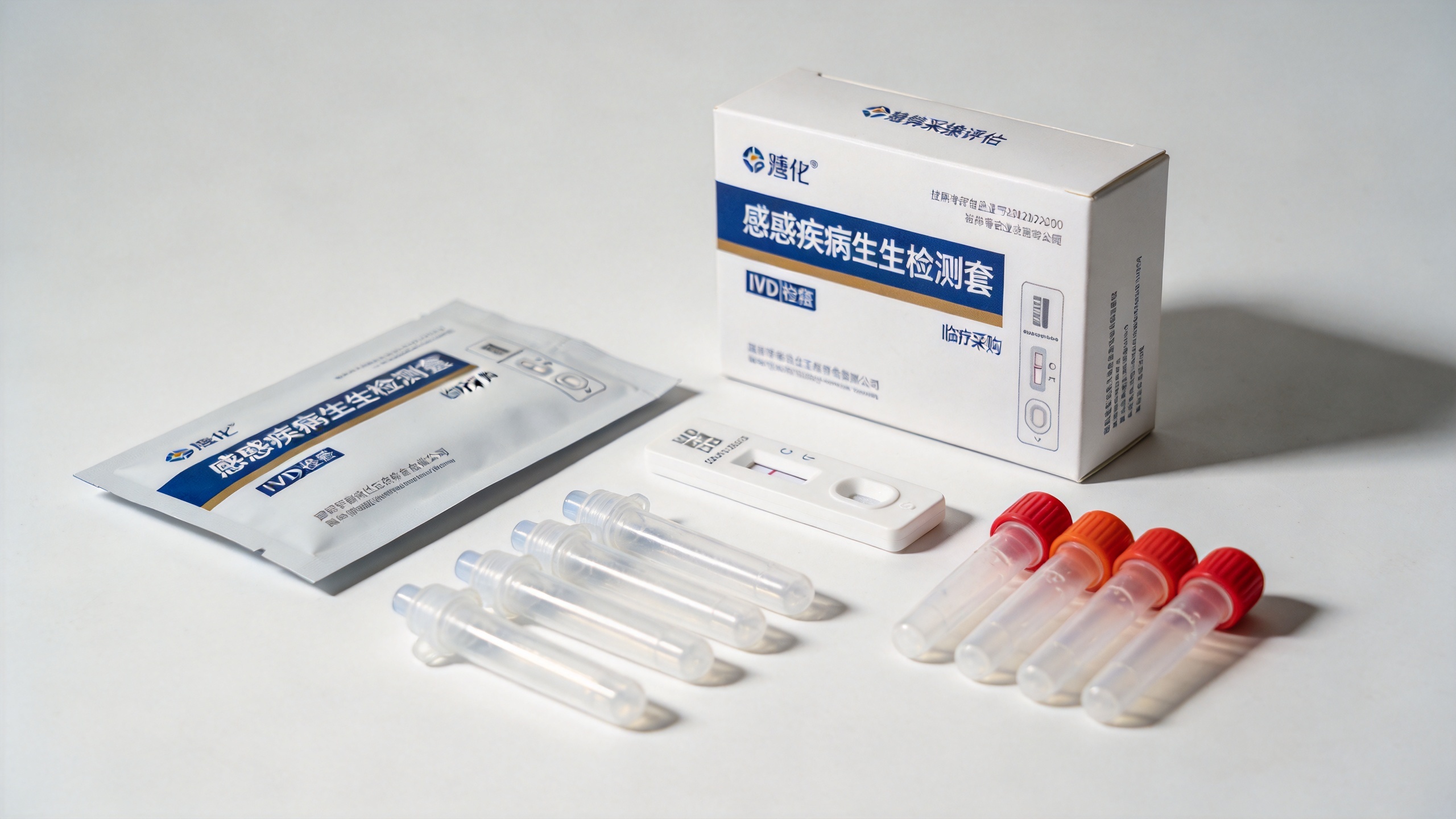
From a procurement and supply chain perspective, sourcing decisions for PCR-based diagnostic kits involve more than performance specifications. Diagnostic kit manufacturing standards, including adherence to ISO 13485 quality management systems and regulatory clearances such as CE-IVD or relevant national registrations, provide independent verification that the production process meets recognized quality thresholds.
Diagnostic kit packaging deserves attention in cross-border procurement contexts. PCR reagents commonly require cold-chain storage, and packaging designed to maintain performance across shipping conditions reduces the risk of pre-analytical degradation. For institutions in regions where reliable cold-chain logistics present operational challenges, storage stability at elevated temperatures becomes a meaningful procurement differentiator.
Supply continuity is another consideration that procurement teams often encounter after the initial contract is signed. Unexpected batch discontinuations, extended lead times during peak demand periods, and changes in reagent formulation without advance notification are documented pain points in diagnostic reagent procurement. Establishing clear supply terms, including advance notification requirements for specification changes and inventory buffer arrangements, helps institutions maintain uninterrupted testing programs.
Conclusion
Real-time PCR diagnostic kits are vital for viral load monitoring because they deliver what no other current detection modality can provide at scale: precise, standardized quantification of viral nucleic acids with sensitivity and specificity adequate for clinical decision-making. Whether the clinical context is HIV treatment monitoring, hepatitis C cure assessment, or transplant immunosuppression management, the technical requirements for a reliable viral load assay converge on the same core capabilities that well-designed molecular diagnostic kits are engineered to meet.
For healthcare institutions, hospitals, and procurement specialists evaluating their next diagnostic kit acquisition, prioritizing validated performance data, lot consistency documentation, regulatory clearance, and supply chain reliability transforms a technical procurement decision into a durable clinical asset.