 EN
EN
The Role of Rapid Test Kits in Early Disease Screening and Prevention
As someone who regularly assists medical institutions and distributors in evaluating point-of-care diagnostic tools, I've watched the demand for reliable rapid test kits grow significantly over the past several years. According to recent industry reports, the global rapid test kits market was valued at approximately USD 20.39 billion in 2025, reflecting just how central these tools have become to modern healthcare delivery and disease management. But what exactly makes a rapid test kit valuable in disease screening, and what should procurement professionals understand before sourcing them in volume?
This article explores the role of rapid test kits in early disease screening and prevention, with a focus on the technical principles behind them, accuracy considerations, and what to look for when evaluating wholesale rapid diagnostic tests for institutional or distribution use.
Understanding the One-Step Rapid Test Principle
Many procurement buyers focus primarily on cost when evaluating rapid diagnostics. But if your priority is selecting products that perform consistently across batches and use settings, understanding the one-step rapid test principle is worth the time investment.
Most rapid test kits in use today operate on a lateral flow immunoassay (LFIA) mechanism. In a one-step format, the user adds a biological sample — commonly a nasal swab, fingertip blood, urine, or throat swab — directly to the test device, and the result appears within a defined window, typically between 10 and 30 minutes. The test relies on antibody-antigen interactions: target analytes in the sample bind to labeled detection antibodies, which then migrate along a nitrocellulose membrane and produce visible lines at control and test zones.
This format requires no specialized equipment, minimal operator training, and produces a result that can be read visually by a clinician or a trained lay user. That combination makes one-step rapid test kits particularly well suited for point-of-care screening in primary care settings, field clinics, and resource-limited environments.
That said, the simplicity of the format does not eliminate the need for standardized operating procedures — a point that matters for buyers planning institutional procurement. In practice, sample collection technique, timing, and storage conditions all affect the consistency of results across operators and sites.
Applications in Early Disease Screening
Rapid test kits have expanded well beyond the COVID-19 testing context that many are most familiar with. Today, they are routinely used for:
- Infectious disease screening: Influenza A and B, respiratory syncytial virus (RSV), malaria, HIV, hepatitis B and C, syphilis, and typhoid fever, among others.
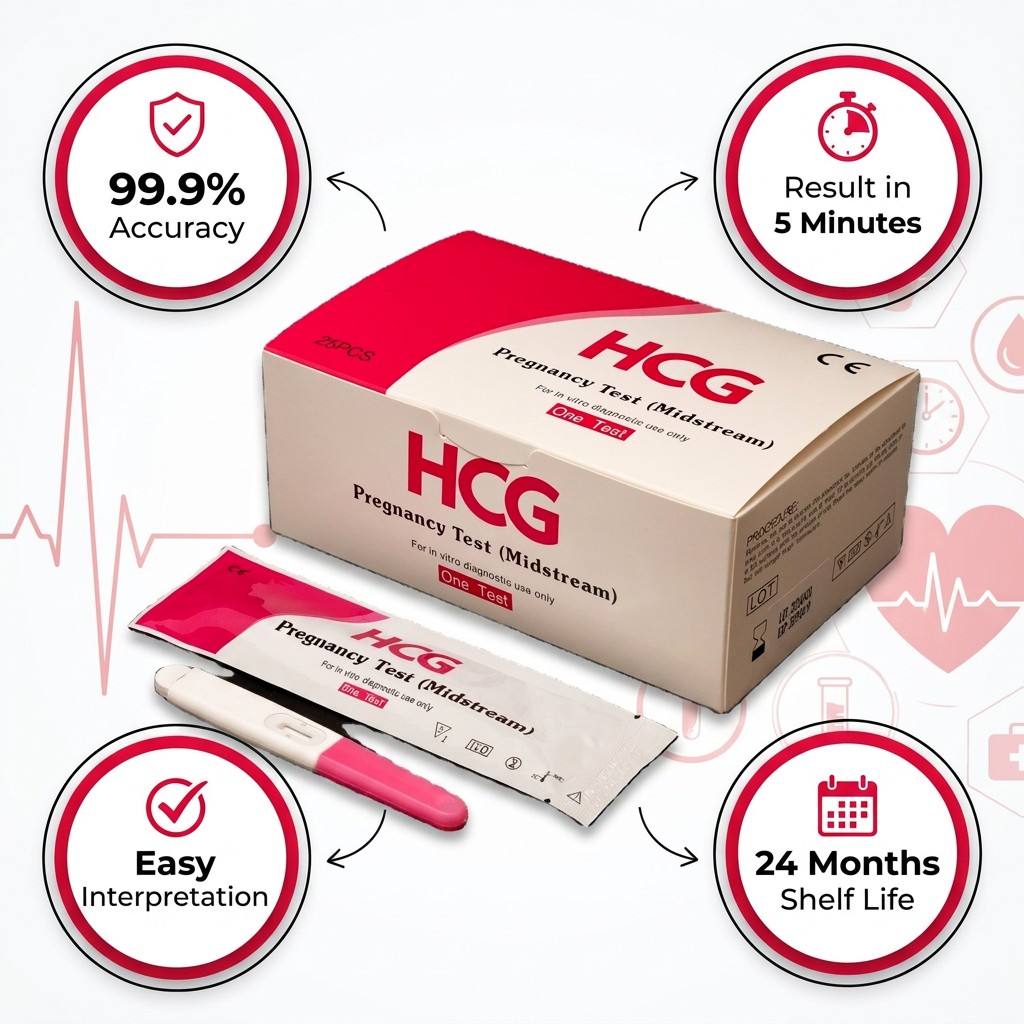
- Sexual and reproductive health: Pregnancy testing, STI screening including chlamydia, gonorrhea, and HIV, particularly in community health and mobile clinic settings.
- Chronic disease monitoring: Blood glucose testing for diabetes screening, and markers for thyroid function or cardiovascular risk in some rapid panel formats.
- Drug and substance screening: Workplace or clinical screening panels for opioids, amphetamines, cannabinoids, and other substances.
The value of rapid test kits in early screening lies in their ability to support timely clinical decision-making. Assume you are managing procurement for a network of community health clinics in a region with seasonal influenza pressure. With rapid influenza test kits on hand, a clinician can differentiate influenza from other respiratory infections within the consultation window, supporting appropriate antiviral prescribing or isolation guidance before a patient leaves the facility. That window of early action — measured in hours rather than days — is precisely where these tools create clinical and public health value.
Rapid Test Kit Accuracy Comparison: What the Numbers Actually Mean
A common misconception worth correcting: a higher price tag does not automatically mean a more accurate rapid test kit. In practice, the factors that most directly influence accuracy are sample quality, adherence to the test protocol, and whether the kit's sensitivity-specificity profile is appropriate for the intended use case.
Two core metrics define diagnostic performance:
- Sensitivity measures how reliably the test identifies true positives — in other words, its ability to detect the condition when it is present. A sensitivity below 80% in a symptomatic population raises meaningful concerns about false-negative rates.
- Specificity measures how reliably the test identifies true negatives — its ability to rule out the condition in people who do not have it. For most screening applications, specificity above 95–99% is important to minimize false-positive burden.
In screening programs, where the goal is to cast a wide net early, high sensitivity is generally the priority, accepting that some false positives will require confirmatory testing. In diagnostic contexts, where a positive result drives treatment decisions, high specificity becomes more critical. Understanding this trade-off is essential when conducting a rapid test kit accuracy comparison across suppliers or product lines.
Sensitivity figures reported in controlled clinical trials can also differ from real-world performance in asymptomatic populations or in environments where sample collection standards vary. Buyers sourcing for mass screening programs should request data from studies conducted in conditions representative of their intended deployment setting.
Sourcing Wholesale Rapid Diagnostic Tests: Key Evaluation Dimensions
For distributors, hospital networks, and public health agencies sourcing at scale, a few dimensions consistently influence procurement decisions beyond basic performance data.
Regulatory compliance and documentation: Regardless of which markets you are purchasing for, the compliance file package — CE marking for EU-adjacent markets, NMPA registration for China, and equivalent requirements in target export markets — should be confirmed before contract. Missing or expired documentation is one of the most common causes of customs clearance delays in cross-border medical device trade.
Batch-to-batch consistency: In wholesale purchasing, the performance of a test kit is only as reliable as the weakest batch in a shipment. Requesting internal quality control records or inter-batch variation data helps establish a baseline expectation before committing to a volume order. First-time buyers are well advised to request a small pilot quantity before scaling, particularly when introducing a product to a new clinical setting.
Storage and cold chain requirements: Some lateral flow kits require refrigerated storage between 2°C and 8°C, while others are stable at room temperature. This distinction has direct implications for warehousing, last-mile delivery in warm climates, and shelf life management — particularly relevant for markets in Africa, Southeast Asia, and South America where cold chain infrastructure may be variable.
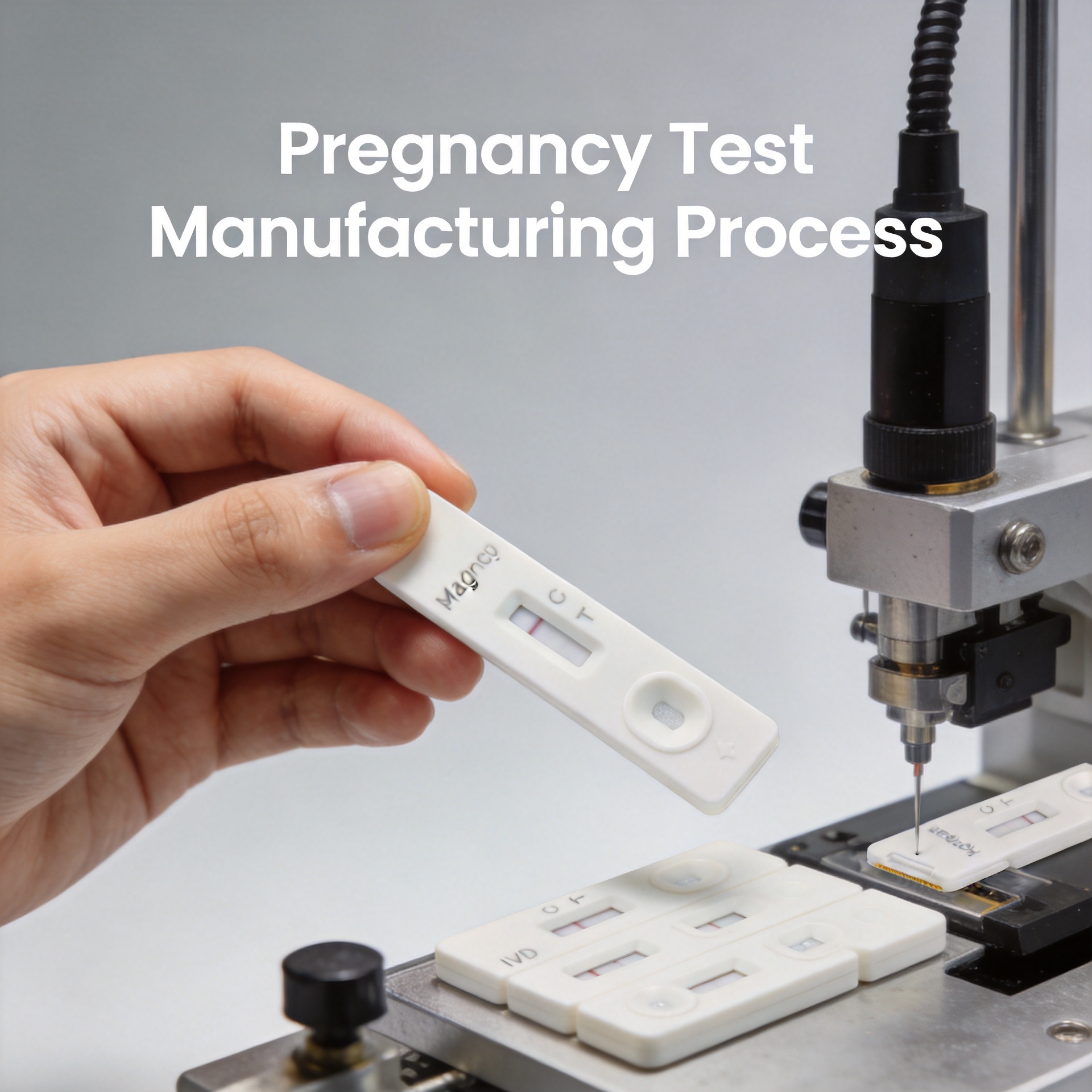
Rapid test kit manufacturing standards: Buyers should assess whether the manufacturer operates under ISO 13485 quality management system certification and whether the manufacturing process is subject to independent third-party audit. Rapid test kit manufacturing quality directly underpins the reliability of every product in a batch — a point that becomes material when sourcing for high-stakes screening programs.
Looking Ahead: Rapid Test Kits in Prevention Strategies
The broader rapid diagnostics market — encompassing point-of-care testing across infectious disease, chronic conditions, and metabolic markers — is estimated at approximately USD 84.72 billion in 2025 and continues to expand. This sustained growth reflects a structural shift in how healthcare systems are approaching disease management: moving earlier in the clinical pathway, closer to the patient, and with greater emphasis on speed.
For rapid test kits specifically, ongoing innovation in multiplexed formats (testing for multiple pathogens from a single sample), digital result readers, and connectivity-enabled devices is beginning to bridge the gap between rapid testing's convenience and the data-richness of laboratory-based diagnostics. For procurement professionals, this creates new evaluation questions around interoperability and data management — not just sensitivity and specificity.
The most effective disease screening programs tend to treat rapid test kits not as a replacement for laboratory confirmation but as the first filter in a layered diagnostic pathway. When that role is understood clearly, and when procurement decisions are made with attention to both technical performance and operational reliability, rapid diagnostics can genuinely shift outcomes — catching conditions earlier, guiding faster responses, and reducing the downstream burden on healthcare systems.
When evaluating rapid test kit options for institutional procurement or wholesale distribution, start with a clear definition of the screening objective — which diseases, which population, which setting — and that alone will narrow the field considerably before you begin comparing supplier specifications.