 EN
EN
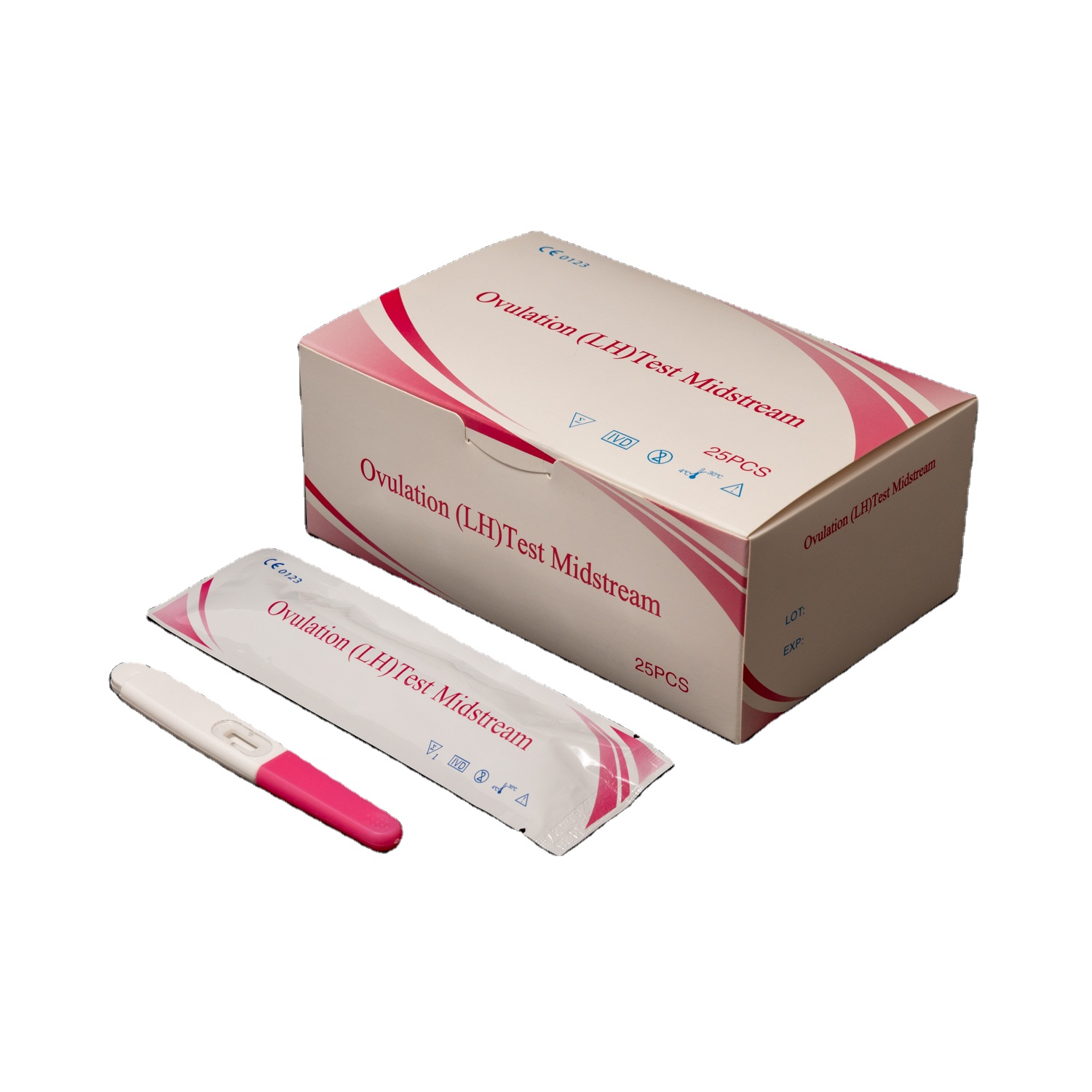
Ovulation Test Kit Storage and Usage Guidelines
Working daily in a clinical lab, you quickly notice something: unreliable ovulation test kit results often trace back not to the kit's design but to how it was stored beforehand, or whether the user followed the testing steps carefully. This guide covers the storage and usage guidelines that protect product stability and test accuracy, whether you're managing a single kit or institutional bulk inventory.
What Is an Ovulation Test Kit and How Does It Work?
An ovulation test kit detects the surge in luteinizing hormone (LH) that occurs 24–36 hours before ovulation. Most standard ovulation test kits detect LH concentrations as low as 22 mIU/ml in urine, making them sensitive indicators of the fertile window. Most kits include 5–7 test strips or sticks, and testing typically needs to be repeated over consecutive days to catch the surge reliably.
The immunoassay reaction in each strip depends on intact antibody-antigen binding. Conditions that degrade those antibodies — particularly temperature extremes, humidity, and light — reduce the test's sensitivity directly. That's why storage conditions aren't just logistical details; they're part of maintaining the product's clinical integrity.
Storage Conditions: Protecting Product Stability Before Use
The standard recommended storage conditions for most ovulation test kits fall within a temperature range of 2–30°C (36–86°F). This range covers both refrigerator-safe storage at the lower end and room-temperature environments at the upper end. In warmer climates or spaces with direct sunlight, conditions near the upper boundary can still accelerate reagent degradation over time.

A few practical principles worth following consistently:
- Avoid freezing. Temperatures below 2°C can damage the membrane structure of the test strip, causing uneven flow and false-negative results. Freezing shortens functional life rather than extending it.
- Control humidity. High humidity causes moisture to penetrate foil packaging and begin degrading the reagent before the test is even opened. Store sealed kits away from bathrooms, kitchen counters, or any area with regular condensation.
- Minimize light exposure. Prolonged direct light, especially UV, can break down the binding agents in the test membrane. A drawer or cabinet is preferable to an open countertop.
- Keep kits in their original foil pouch until use. The foil packaging is a moisture and light barrier by design. Opening it prematurely starts the degradation clock, even if you just want to inspect the strip.
Have you ever opened a batch of test kits and noticed unusually faint lines even on a day with a clear LH surge? In many cases, that traces back to storage problems earlier in the supply chain — not the test design itself.
Step-by-Step Usage Guidelines for Accurate Results
A correctly stored ovulation test kit can still give misleading results if the usage steps aren't followed precisely. The process below applies across most standard strip and cassette formats:
- Read the package insert before you begin. Formats vary between manufacturers — some require mid-stream urine collection, others need a cup. Reaction times differ too, typically between 3–10 minutes. This step is more often skipped than it should be.
- Time your testing window. Test at the same time each day, typically between 10 a.m. and 8 p.m., when LH concentration in urine tends to be highest. The first morning void usually isn't ideal, since LH often surges later in the day.
- Limit fluid intake before testing. Large fluid intake in the two hours before testing can dilute urinary LH concentration and lower the apparent signal on the strip, potentially producing a false-negative just before the actual surge.
- Read results within the designated window. Most ovulation test kits specify a reading window of 3–10 minutes. Results read after this window may show evaporation lines that look like a positive, which is a common cause of misinterpretation.
- Compare line intensity carefully. A positive result on most LH-based strips means the test line is equal to or darker than the control line. A visible but lighter test line is still a negative, indicating LH is rising but not yet at surge threshold.
If results are inconsistent over several days without a clear peak, it's worth checking whether the current batch was stored under appropriate conditions before use.
Diagnostic Kit Management for Institutional and Bulk Settings
For clinics, labs, and distributors managing ovulation test kits at scale, sound diagnostic kit management practices are critical to maintaining test accuracy across every batch used.
The shelf life of most ovulation and LH test kits ranges from 8 to 36 months from the manufacturing date. The expiry date is the manufacturer's guarantee that the test will perform at its stated accuracy — typically 99% or higher — under correct storage conditions. Once that date has passed, accuracy can no longer be assured, even if the kit appears intact.
Practical inventory management principles:
- Apply first-in, first-out (FIFO) rotation. Kits with earlier expiry dates should be placed at the front of the stock and used first. This prevents functional kits from reaching expiry while newer stock is opened ahead of them.
- Record batch numbers and arrival dates at intake. Without this record, tracing the root cause of inconsistent batch performance becomes difficult — the problem may come from a specific lot or from a storage excursion during shipping.
- Inspect packaging upon receipt. Damaged foil seals, swollen pouches, or kits exposed to visible moisture during transit should be flagged before distribution. Effective diagnostic kit management starts at the receiving stage.
- Train users on storage requirements before distribution. When test kits go to community health workers, smaller clinics, or end users without formal lab training, a brief storage briefing significantly reduces handling-related failures.
The Link Between Storage Conditions and Test Accuracy
Most people assume that a kit within its expiry date will perform as labeled. That assumption holds — provided the kit has been kept within the recommended temperature range and sealed until use. But product stability is a continuous property, not a binary one that holds until the printed date and then fails.
Reagent degradation is gradual. A kit stored at a consistent 28–30°C over several months will typically have less remaining reagent activity than an identical kit stored at 15–20°C, even if both are technically within expiry. The first kit may still work, but its signal intensity could be slightly reduced — which matters most when LH levels are at the lower end of the detectable range, such as in the early rise phase before the full surge.
For institutional users relying on ovulation test kits as part of a fertility monitoring or reproductive health program, understanding this nuance helps explain why results vary between batches and guides better procurement and storage decisions.
Key Takeaways
Proper use of an ovulation test kit begins before the test is opened. Storing kits at 2–30°C, away from humidity, light, and temperature extremes, forms the foundation of product stability. Following usage steps precisely — from timing and hydration control to reading results within the correct window — ensures test accuracy is maintained. For organizations managing kits at scale, consistent diagnostic kit management practices — FIFO rotation, batch tracking, and incoming inspection — protect both the user and the reliability of the data being collected.
If your setting involves bulk procurement or ongoing clinical use of ovulation test kits, incorporating these practices into standard operating procedures is the baseline for results you can trust. For inquiries about sourcing reliable IVD diagnostic kits with full compliance documentation for your region, JIUHEKIT is available to assist at www.jiuhekit.com.