 EN
EN
What Hormone Does an Ovulation Test Kit Detect and Why?
When procurement teams evaluate an ovulation test kit for clinical or wholesale supply, the specification sheets tend to focus on strip count, shelf life, and packaging format. What is rarely explained is the foundational question: which hormone does an ovulation test kit actually measure, and why was that hormone selected above others involved in the menstrual cycle? Understanding this distinction matters both for evaluating product claims and for assessing the practical accuracy of the lh ovulation test strips you plan to distribute.
The following sections cover the biology, detection mechanism, and what these details mean for sourcing decisions across wholesale, clinical, and diagnostic channels.
The Hormone an Ovulation Test Kit Detects: Luteinizing Hormone (LH)
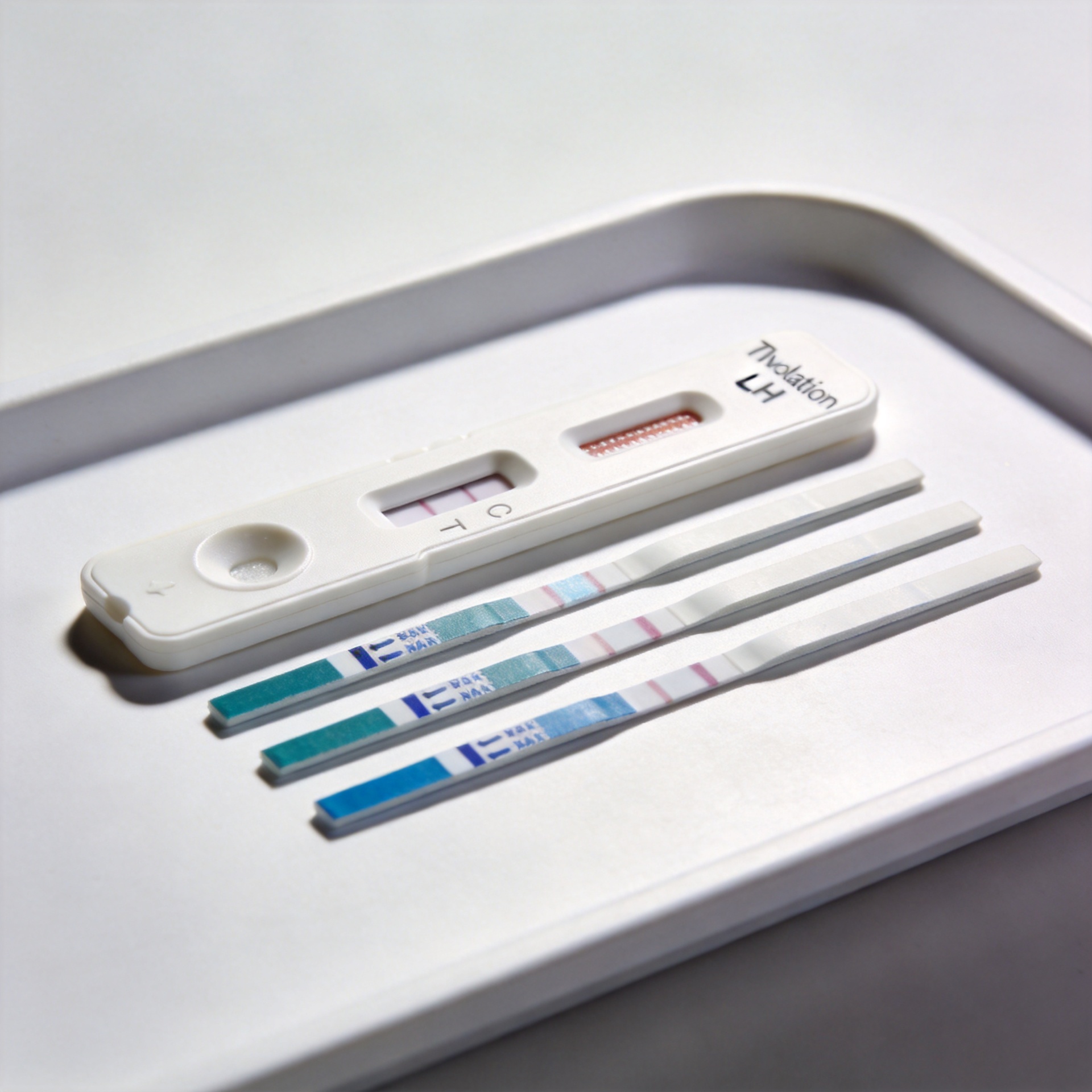
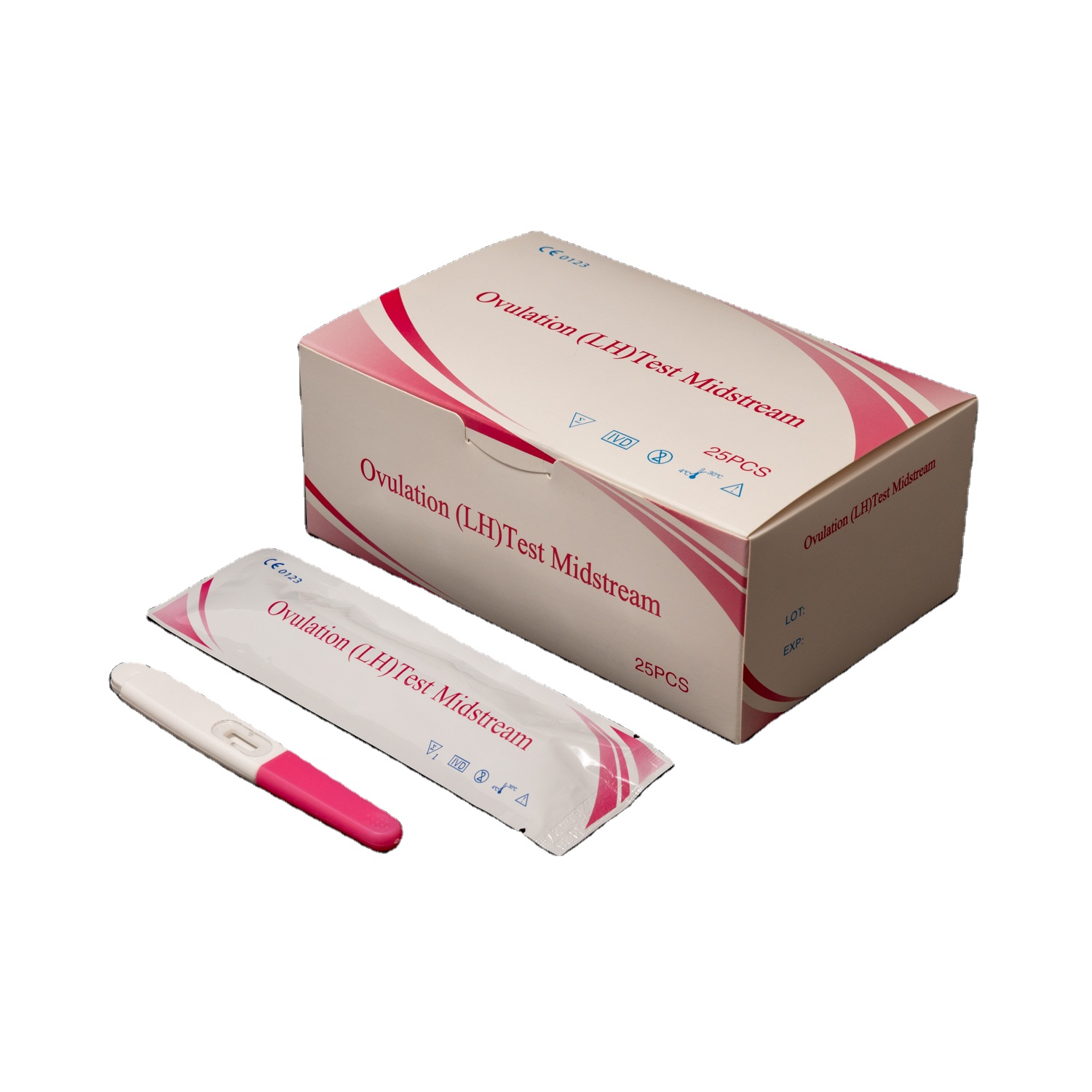
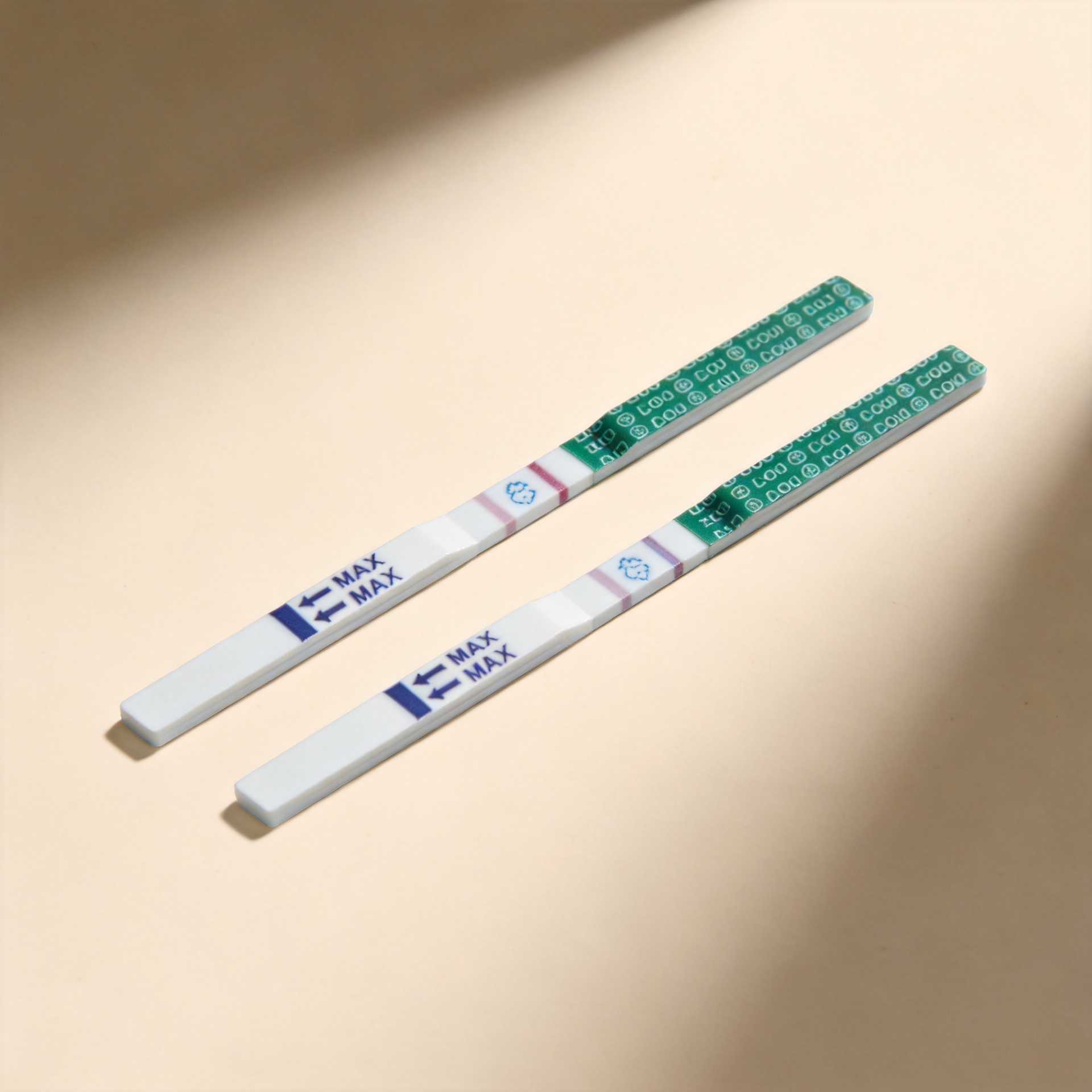
Every standard ovulation test kit, ranging from a basic lh ovulation test strips format to a multi-component ovulation predictor kit with digital display,targets a single hormone: Luteinizing Hormone, abbreviated as LH.
LH is a gonadotropin produced and secreted by the anterior pituitary gland. Through most of the menstrual cycle, LH circulates at relatively steady baseline levels, typically 2–15 mIU/mL depending on the cycle phase. In the days leading up to ovulation, the pituitary releases a sharp burst of LH, referred to as the LH surge,. Research indicates surge values typically range from 20 to 100 mIU/mL, with an average surge peak around 44.6 mIU/mL. This surge directly triggers the dominant ovarian follicle to rupture and release a mature egg. Any reliable ovulation test kit is built around detecting this precise hormonal event.
The critical clinical feature of the LH surge is its timing: ovulation follows approximately 24 to 36 hours later, giving a predictable and actionable window. An ovulation test kit catches this surge in a urine sample, giving users advance warning rather than after-the-fact confirmation. That predictive window is the core clinical value that all lh ovulation test strips are designed to deliver.
Why LH—and Not Another Cycle Hormone?
The reproductive cycle involves multiple hormones: Follicle-Stimulating Hormone (FSH), Estradiol (E2), Progesterone, and LH. Each plays a role, but only LH is well-suited to the immunochromatographic lateral-flow format of a standard ovulation predictor kit. Three properties explain why:
- Surge magnitude: The LH surge is a sharp, high-amplitude spike that rises several multiples of baseline within hours. This makes it far easier to define a reliable yes/no detection threshold in any ovulation test kit compared to hormones like estradiol, which rise more gradually.
- Surge timing: LH surges 24–48 hours before egg release, giving actionable advance notice. Progesterone rises only after ovulation has occurred, making it useful for confirmation rather than prediction. FSH peaks earlier and is harder to distinguish from baseline in a home-use format.
- Urine excretion: LH is measurable in urine at clinically meaningful concentrations throughout the surge window. This enables the non-invasive, accessible format of modern lh ovulation test strips and fertility monitor strips.
These three properties together make LH the uniquely appropriate biomarker for the rapid, urine-based format that defines the current generation of diagnostic products, including those distributed through ovulation test strips wholesale channels globally.
How the Detection Mechanism Works in LH Ovulation Test Strips
Understanding the assay helps B2B buyers evaluate sensitivity claims more critically. Standard lh ovulation test strips use a lateral-flow immunochromatographic assay—the same platform underlying rapid antigen tests and pregnancy strips. Here is how detection works:
- Urine is applied to the absorbent pad at the sample end of the strip.
- Urine wicks up through a nitrocellulose membrane by capillary action.
- It reaches a conjugate pad containing LH-specific antibodies tagged with a colored marker (typically colloidal gold or latex particles). LH molecules present in the urine bind to these antibodies.
- The LH–antibody complexes migrate to the test line, where a second LH-specific antibody is immobilized. When sufficient complex accumulates, a visible band formsindicating a positive result in the ovulation predictor kit.
- Unbound conjugate is captured at the control line, confirming the test ran correctly regardless of LH concentration.
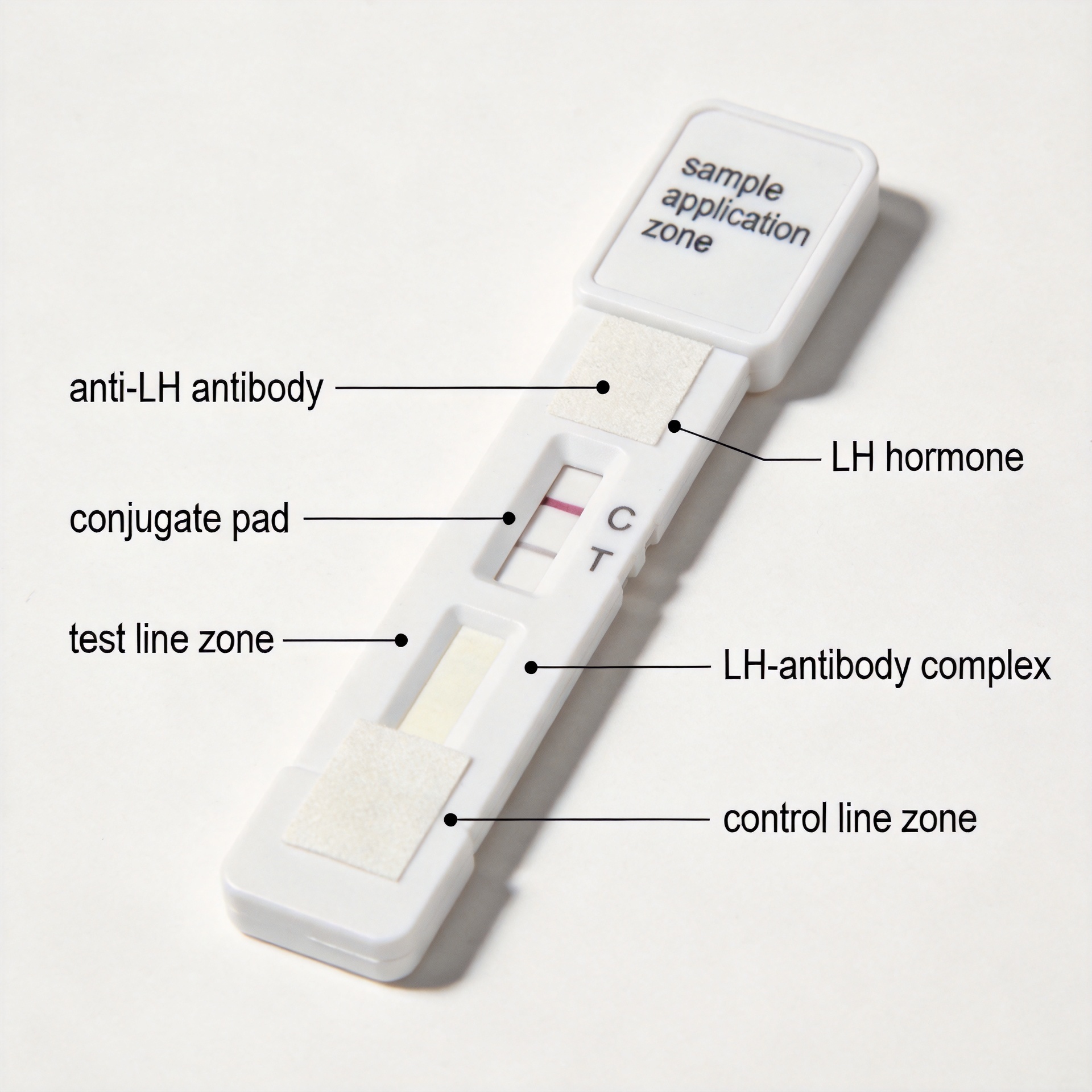
The sensitivity threshold—the minimum urine LH concentration triggering a visible test lineis a primary quality differentiator between products. Published research suggests that detection thresholds in the range of 20–25 mIU/mL offer good predictive accuracy. Test strips with thresholds set too high (e.g., 40 mIU/mL) risk missing genuine surges, particularly in users with PCOS or lower surge amplitude. This specification detail is often overlooked in ovulation test strips wholesale purchasing but is critical for downstream product reliability.
Procurement Criteria for Wholesale and Clinical Buyers
The global ovulation testing kits market was valued at approximately USD 2.87 billion in 2022 and is projected to reach around USD 4.85 billion by 2030, reflecting sustained wholesale demand across clinical and consumer channels. Within this expanding market, quality differentiation among diagnostic strip products is becoming a more meaningful purchasing factor as informed buyers move beyond simple unit-cost comparisons.
For organizations evaluating suppliers of fertility monitor strips or standard test products for wholesale or clinical distribution, the following technical parameters should form the core of a quality assessment:
- Detection sensitivity (threshold): A 20–25 mIU/mL sensitivity is the expected standard for a clinically reliable strip. Lower thresholds reduce specificity; higher thresholds risk false negatives. Request sensitivity validation data with any ovulation test strips wholesale order, not just a claimed specification.
- Cross-reactivity profile: LH shares a structural subunit with hCG, FSH, and TSH. Well-validated test strips include documented cross-reactivity data. Products without such data introduce unpredictable interference risks in clinical settings.
- Batch-level quality control: Lateral-flow assay performance can vary between manufacturing batches. Request batch-specific QC documentation from your supplier; product-level specifications alone are insufficient for clinical procurement decisions.
- Cold-chain and stability: LH antibody conjugates are temperature-sensitive. For international distribution or warm-climate markets, confirm stability range and that accelerated aging data supports the claimed shelf life of the fertility monitor strips or standard strips in your catalog.
When Fertility Monitor Strips Add More Than LH Detection
Advanced fertility monitor strips and digital monitor systems offer dual-hormone detection, typically measuring both LH and Estrone-3-Glucuronide (E3G), a urinary metabolite of estradiol. By incorporating the estradiol rise that precedes the LH surge by two to four days, these extended-format products identify a fertile window of four to six days rather than approximately two.
For wholesale buyers supplying fertility specialty clinics or premium consumer health programs, the distinction between LH-only strips and dual-hormone fertility monitor strips matters when building a product range. LH-only formats cover the core clinical need at a lower cost per unit; dual-hormone formats address more sophisticated monitoring needs in assisted reproduction protocols. Understanding where your end-user sits helps match the right product tier without over-engineering the clinical requirement.
Regulatory Context and Compliance for Export Distribution
In regulated markets, urine-based LH detection devices are classified as home-use medical devices. The FDA categorizes ovulation urine tests under home-use devices, requiring cleared labeling and validated performance data from manufacturers.
For distributors importing or exporting diagnostic strips across Asia, Europe, Africa, or the Americas, confirming that products carry destination-market clearance rather than only country-of-origin certification is a non-negotiable sourcing step. Beijing Jiachuang Jiuhe Global Trade Co., Ltd maintains compliance documentation support for export orders, helping buyers avoid clearance delays or documentation gaps that disrupt delivery timelines.
Summary
An ovulation test kit detects Luteinizing Hormone (LH) in urine, specifically the pre-ovulatory LH surge, that occurs 24 to 48 hours before egg release. LH was chosen as the detection target because of its sharp, well-timed surge and reliable urine excretion, characteristics that translate naturally into the lateral-flow format used in every set of lh ovulation test strips.
For B2B buyers sourcing strips or ovulation predictor kit products for clinical or wholesale distribution, understanding this biology provides the grounding to compare supplier specifications critically: reviewing detection thresholds, cross-reactivity data, batch consistency, and regulatory status rather than surface-level product descriptions. Contact our team to discuss current inventory, sensitivity documentation, and multi-market compliance support for export distribution.