 EN
EN

The Advantages of Colloidal Gold Strips in Point-of-Care Testing
From an engineering perspective, few developments in diagnostic technology have had as broad an impact on clinical accessibility as the colloidal gold lateral flow strip. Over the past two decades, point-of-care testing (POCT) has shifted steadily away from centralized laboratory infrastructure toward decentralized, near-patient formats — and colloidal gold remains at the heart of that transition.
In this article, I'll walk through what makes colloidal gold test strips particularly suited to POCT environments, how the underlying mechanism works, and where the practical boundaries of the technology lie. Understanding these points is genuinely useful for procurement decision-makers, medical device distributors, and clinicians evaluating rapid diagnostic options.
What Makes Colloidal Gold Different
Many people assume colloidal gold refers only to nutritional supplements or cosmetic ingredients . In the diagnostic industry, colloidal gold describes a suspension of gold nanoparticles (typically 20–40 nm in diameter) in an aqueous solution. When conjugated to antibodies or antigens, these particles function as highly visible signal labels in immunoassay formats.
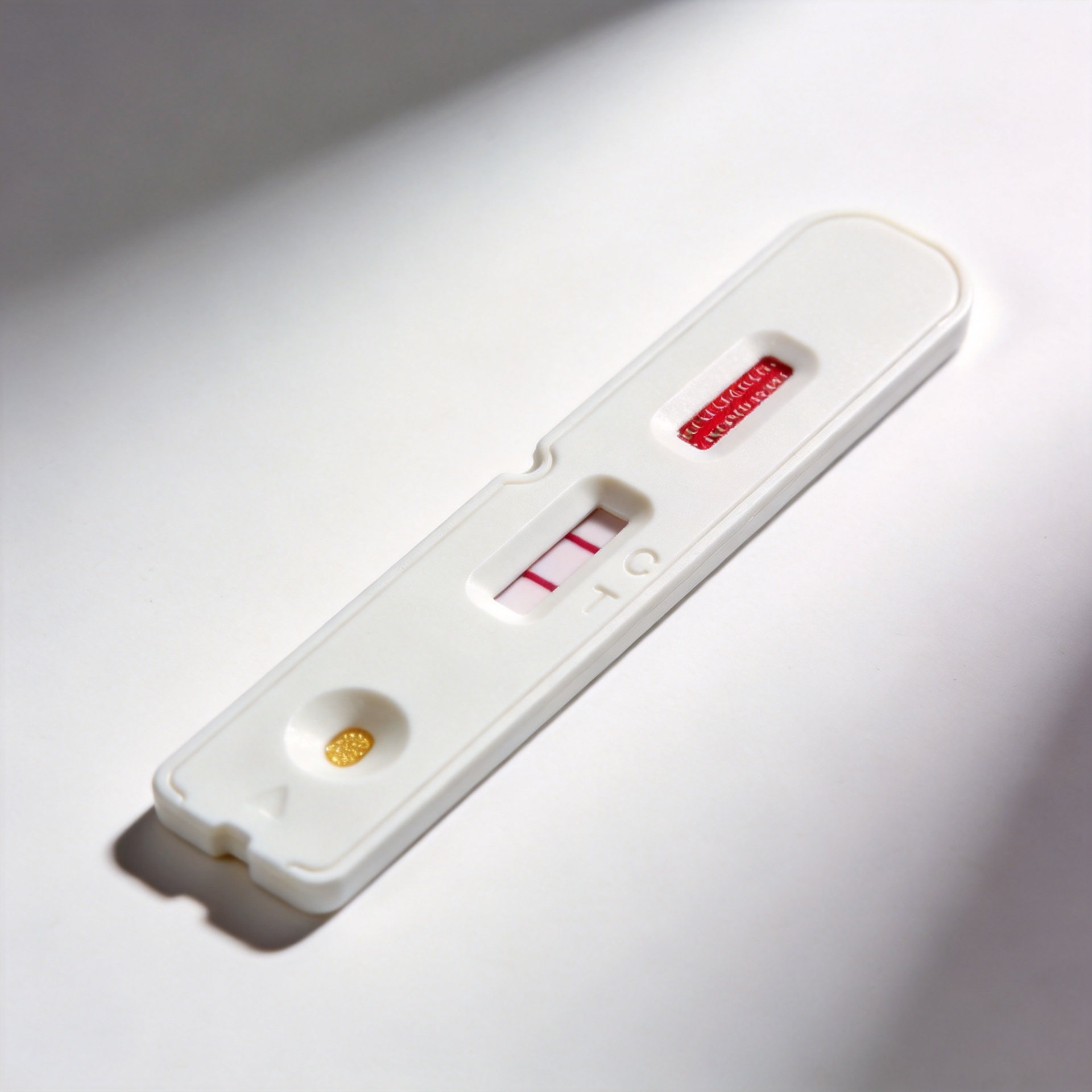
In a lateral flow immunoassay, colloidal gold particles conjugated to target-specific antibodies migrate along a nitrocellulose membrane. When the analyte is present in the patient sample, a red or pink line forms at the test zone — the classic visual result that makes these strips usable without any reading instrument.
Key Advantages of Colloidal Gold Strips in POCT
1. Rapid Results Without Laboratory Infrastructure
Colloidal gold-based assays typically deliver results within 5 to 30 minutes, depending on the target analyte and format. Crucially, this speed comes without requiring a centrifuge, incubator, or spectrophotometer. For clinics operating in low-resource or remote settings, or for emergency triage situations where time-to-result directly influences patient management, this combination of speed and equipment independence is a significant operational advantage.
If your facility runs fewer than 20 targeted tests per day and lacks a full laboratory setup, colloidal gold test strips usually represent a more practical choice than enzyme-linked immunosorbent assays or PCR , particularly when factoring in both reagent costs and equipment amortization.
2. Simplified Workflow and Minimal Training Requirements
The colloidal gold rapid test principle follows a one-step, no-wash-step format. Users apply the sample — whole blood, urine, or nasopharyngeal swab eluate — and read the result visually within the specified window. There are no pipetting sequences, no incubation timers to manage, and no reagent mixing steps.
In observing how different healthcare facilities deploy rapid tests, the consistency of results across a clinic correlates strongly with whether staff follow standardized sample collection protocols , not just with the strip technology itself. Proper sample volume and correct sample type remain the most common operator-related sources of variability. This is not a flaw unique to colloidal gold, but it's worth factoring in when planning staff training around lateral flow immunoassay platforms.
3. Competitive Sensitivity and Specificity Performance
A common misconception is that colloidal gold strips are inherently less accurate than laboratory-based methods. More precisely: sensitivity and specificity depend heavily on antibody selection, antigen design, and the specific analyte being targeted — not solely on the signal reporter material.
Peer-reviewed studies on gold nanoparticle-conjugated lateral flow assays for infectious disease markers have reported sensitivity values in the range of 94.6% to 100% and specificity values of 93.3% to 100% for well-optimized formats. In practical POCT applications, performance at this level is sufficient for initial screening, rapid triage, and routine monitoring in settings where laboratory confirmation is available for borderline or clinically significant results.
4. Room-Temperature Stability and Cold Chain Independence
Colloidal gold nanoparticles are chemically stable across a broad temperature range, which translates into longer shelf life under ambient storage conditions compared to some enzyme-based formats. For distributors serving regions where cold chain logistics are unreliable — across parts of Africa, Southeast Asia, and Latin America — this stability advantage has real supply chain implications.
The gold nanoparticle conjugation mechanism does not require enzymatic activity, which removes the sensitivity to heat exposure that can degrade ELISA or PCR-based reagents during transit. When storage temperature requirements are less stringent, the practical reach of a diagnostic product extends considerably.
5. Cost Structure Suited to High-Volume Screening Programs
From a total cost-of-use perspective, colloidal gold test strips offer several structural advantages. The manufacturing process for nitrocellulose-based lateral flow strips is well-established and scalable. There is no per-test equipment capital cost, and waste generation per test is minimal. For public health programs requiring broad population screening — such as infectious disease surveillance campaigns or antenatal screening programs — the per-test cost of colloidal gold-based rapid diagnostics is typically significantly lower than laboratory platform alternatives.
How Gold Nanoparticle Conjugation Enables the Lateral Flow Format
Understanding the gold nanoparticle conjugation process clarifies why colloidal gold performs as it does in lateral flow immunoassay settings. During conjugation, antibodies are adsorbed onto gold nanoparticle surfaces through electrostatic and hydrophobic interactions , a relatively straightforward process that preserves antibody functionality.
In a standard sandwich-format strip, the gold-antibody conjugate is dried into the conjugate pad. When sample fluid rehydrates the conjugate and carries it along the nitrocellulose membrane, any analyte present binds to the gold-conjugated antibodies. This complex is then captured at the test line by a second antibody, producing a visible red band. Excess conjugate continues to the control line, confirming that liquid flow has completed correctly.
The visual signal produced by concentrated gold nanoparticles is detectable by the naked eye without amplification , a property that distinguishes colloidal gold from fluorescent or chemiluminescent label systems that require readers for signal detection. For resource-constrained environments, this reader-independence is often more operationally valuable than the marginal sensitivity gains offered by instrument-dependent systems.
Limitations Worth Considering
Rapid test results — including those from colloidal gold rapid test platforms — are screening results, not final diagnoses. For analytes where the clinical stakes of a missed positive are high, or where treatment decisions carry significant consequence, confirmatory testing through a laboratory method is the appropriate standard of care. This is not a shortcoming specific to colloidal gold; it reflects the intended role of any point-of-care screening tool.
For quantitative applications — measuring precise hormone levels, monitoring disease markers across a concentration range, or distinguishing borderline results — standard colloidal gold lateral flow strips have limitations. Semi-quantitative reader devices exist and can extend the format's utility, but they add cost and infrastructure requirements that partially offset the platform's operational simplicity.
Applications Driving Demand for Colloidal Gold POCT Strips
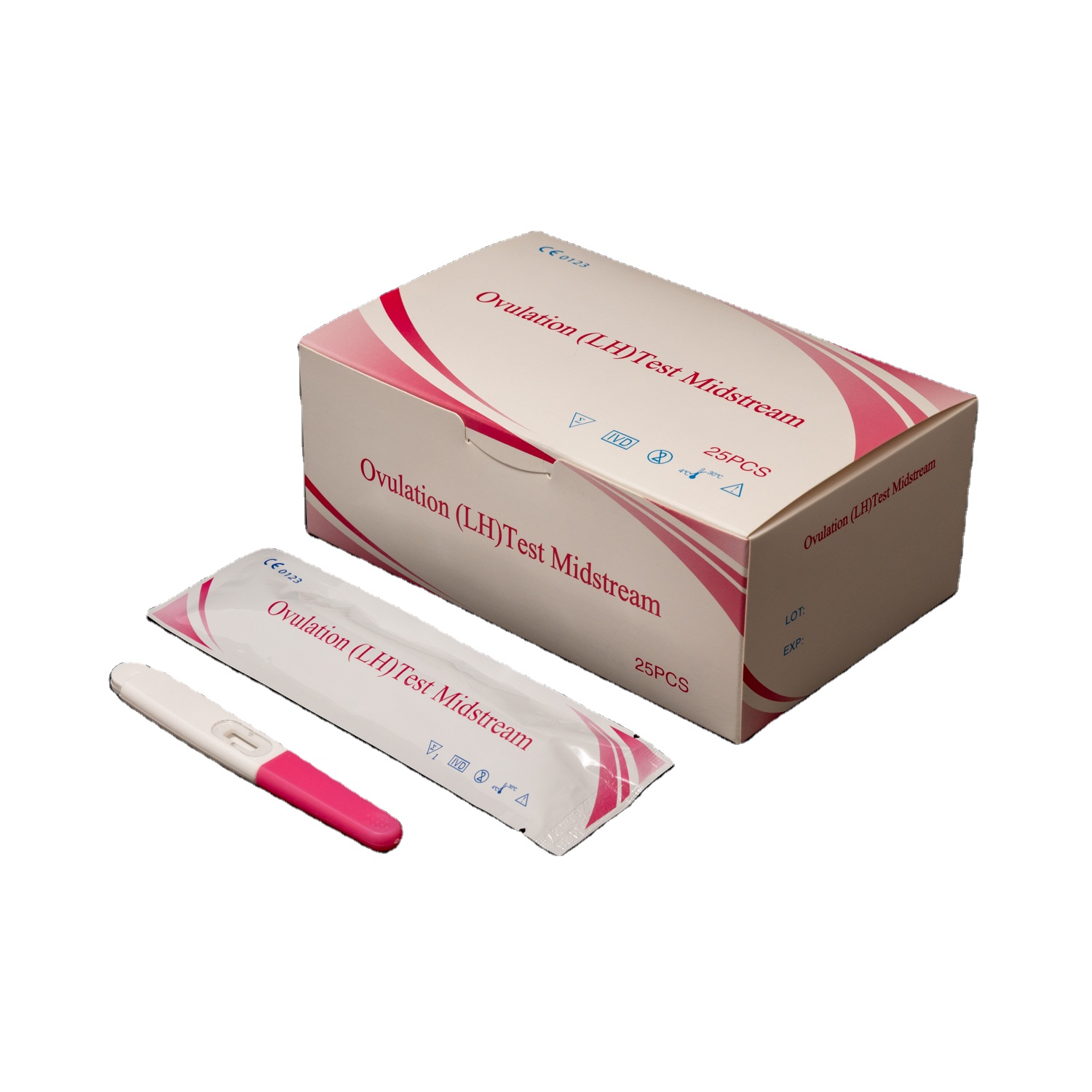
The range of analytes addressed by colloidal gold lateral flow formats has expanded substantially. Infectious disease screening — influenza, HIV, malaria, dengue, COVID-19 antigen and antibody — remains the largest segment by volume. Fertility and reproductive health markers (hCG, LH, FSH), cardiac biomarkers, thyroid function indicators, and drug-of-abuse testing panels have all been successfully developed in colloidal gold lateral flow formats.
For medical device distributors evaluating which rapid diagnostic categories to prioritize, the breadth of available analytes in the colloidal gold platform means procurement consolidation is possible: a single underlying technology format can address screening needs across multiple clinical areas, simplifying training, quality control, and inventory management. Distributors sourcing rapid diagnostic kits benefit from working with suppliers who understand both the technical and compliance requirements of target markets.
Conclusion
Colloidal gold strips occupy a well-defined and technically defensible position in the diagnostic landscape. Their combination of no-equipment operation, rapid result delivery, acceptable sensitivity and specificity for screening purposes, ambient storage stability, and low per-test cost makes them a practical choice for a wide range of point-of-care environments — from hospital emergency departments to community clinics in regions with limited laboratory infrastructure.
Understanding the colloidal gold rapid test principle and its practical implications helps procurement decision-makers select the right format for specific clinical workflows, rather than defaulting to more complex platforms where they offer limited additional benefit. As demand for decentralized diagnostics continues to grow, colloidal gold remains one of the most field-proven and widely validated signal technologies in point-of-care testing. For organizations seeking reliable colloidal gold test strips for global distribution, Beijing Jiachuang Jiuhe Global Trade provides diagnostic kit sourcing support across Asia, Europe, Africa, and the Americas.