 EN
EN
Sourcing Rapid Test Kits for Hospitals, Clinics, and Public Health Programs.
The global rapid diagnostics market reached USD 35.3 billion in 2024 and is projected to grow at a 6.8% CAGR through 2034. For procurement managers and public health coordinators, this growth reflects both an expanding product landscape and a more complex sourcing environment. Knowing how to evaluate and source a rapid test kit effectively reduces supply disruptions and supports better care outcomes for your institution.
From the perspective of those who have assisted hospitals and clinics with diagnostic equipment procurement, the most common challenge is not finding a supplier—it is knowing which criteria matter most before committing to a bulk order. A structured approach helps you avoid costly mistakes.
Understanding Your Institution's Diagnostic Testing Requirements
Before evaluating any supplier, it helps to map your institution's specific requirements across three dimensions:
- Testing volume: How many tests does your facility process daily or weekly, and is that demand steady or subject to seasonal spikes?
- Disease scope: Are you sourcing for a single condition, or building a broader multi-disease panel to support routine and outbreak response testing?
- Operational context: Do you need the simplicity of a point-of-care cassette, or does your facility support slightly more structured testing protocols?
If you are managing supply for a clinic with limited storage, or for a public health program that needs to scale quickly during an outbreak, supply chain reliability is not a secondary concern. It is part of the product evaluation itself. A supplier with strong test performance but unreliable delivery schedules creates downstream risk that compounds over time.

A Decision Framework for Sourcing Rapid Test Kits
1. Disease Coverage and Product Range
When sourcing wholesale rapid diagnostic tests, consider whether your supplier can support multiple disease categories under one relationship. Hospitals managing respiratory illness alongside sexually transmitted infection screening or tropical disease surveillance often benefit from working with a supplier who covers a broad test menu—reducing the complexity of managing multiple vendor approvals. Seasonal patterns matter here too: demand for flu and respiratory rapid test kits increases predictably each year, and advance procurement planning helps institutions avoid stock gaps during peak periods.
2. Regulatory Compliance and Documentation
Regulatory requirements are where many procurement processes encounter delays. Each market has its own standards: CE marking for Europe, FDA clearance for the United States, and independent national registration requirements across markets in Asia, Africa, and Latin America. CE certification for one product does not automatically qualify it for export to another region. This is a distinction that is easy to overlook when comparing supplier catalogs.
When evaluating any supplier, make sure to request product registration certificates relevant to your target market, batch-level quality control records, and export compliance documentation packages. For cross-border procurement, incomplete regulatory documentation has caused significant customs delays. In some cases, shipments have been held at port for weeks due to a missing local registration attachment—a cost in time and institutional trust that far exceeds the savings from a lower unit price.
3. Supplier Reliability and Supply Chain Stability
Understanding rapid test kit manufacturing practices is part of evaluating a supplier's reliability. A supplier with documented quality management processes and transparent batch production records provides a more predictable supply chain than one that cannot clearly explain its consistency controls. Ask about lead times, minimum order quantities, and their process for managing resupply during periods of high demand.
The true risk in rapid test kit procurement rarely appears on the first order. It surfaces when a resupply is needed urgently, or when a new batch arrives with measurable performance variation from the previous one. Suppliers who support small trial orders before bulk commitments give buyers a practical checkpoint before a large financial commitment.
4. Understanding the One-Step Rapid Test Principle
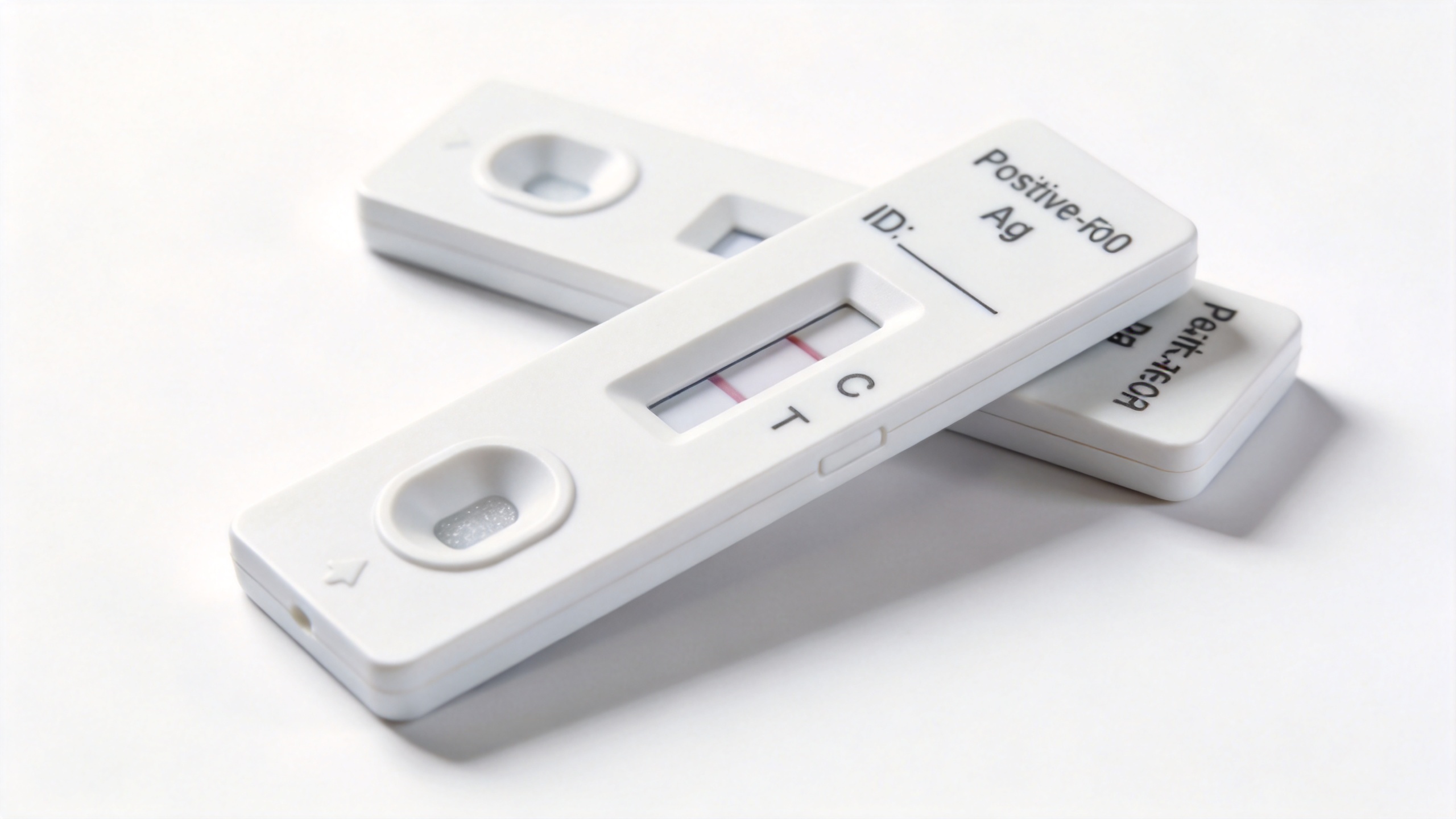
Most modern lateral flow-based kits operate on the one-step rapid test principle: a sample is applied directly to the device, migrates through a coated membrane, and produces a visual result within 15–30 minutes. This immunoassay-based mechanism underpins the majority of rapid diagnostic tests used in infectious disease screening. Understanding how this works has practical implications for procurement:
- Storage requirements: Lateral flow membranes are temperature-sensitive. Kits stored outside their specified range—even for a short period during transport—can show reduced sensitivity.
- Sample type compatibility: Not all one-step kits accept the same sample types. Confirm whether you need whole blood, serum, nasal swab, or urine compatibility for your setting.
- Staff training burden: Simpler one-step designs that require fewer preparation steps reduce operational errors in facilities where frontline staff rotate frequently or lack laboratory training.
5. Rapid Test Kit Accuracy Comparison Before Bulk Commitment
Conducting a meaningful rapid test kit accuracy comparison between candidate products means looking beyond the sensitivity and specificity figures in a supplier's own documentation. Where possible, request independent validation data, published peer-reviewed performance evaluations, or lot-specific QC reports. If independent data is not available, a structured trial order using a representative sample of your patient population provides a practical baseline.
A pattern that appears consistently in institutional procurement: bypassing the trial order phase to save lead time creates significantly larger problems when batch inconsistencies emerge after a full procurement commitment. Batch-to-batch variation in rapid test kits is one of the most cited quality concerns in healthcare settings, and it is far easier to address before a bulk purchase than after.
Applying the Framework to Different Institution Types
For hospital procurement teams, the primary questions are: Is regulatory approval confirmed for your target market? Does the supplier's delivery history support your resupply cycle? Is lot-specific quality documentation available on request?
For clinics with limited storage capacity, storage temperature range and packaging format may carry more weight than cost per test. A rapid test kit with a slightly higher unit price but a 24-month shelf life under ambient conditions may reduce waste significantly compared to a lower-priced alternative requiring refrigeration throughout the distribution chain.
Public health programs sourcing at scale should prioritize lead time commitments, the supplier's capacity to fulfil flexible order volumes during outbreak response, and their track record with international logistics and export documentation to your region.
Finding a Reliable B2B Supplier for Rapid Test Kits
For institutions working to establish a stable supply of rapid test kits, a specialist B2B supplier familiar with export compliance and multi-market distribution can reduce friction on both the compliance and logistics sides of procurement. Jiuhekit.com supplies diagnostic test kits and detection equipment to medical device wholesalers, hospitals, and clinics across Asia, Europe, Africa, and the Americas. Whether your immediate need is confirming documentation for a new market, placing a trial order ahead of a larger program commitment, or structuring a resupply arrangement for ongoing operations, the team at Jiuhekit can outline what a practical sourcing relationship looks like. Reach out to Cher Li at [email protected] to begin the conversation.