 EN
EN
Rapid Test Kit Materials and Manufacturing Process Overview
From a product development standpoint, a rapid test kit is considerably more complex than it appears to the end user. The ability to deliver a diagnostic result within 15 to 30 minutes depends on carefully selected membrane materials, precisely formulated reagents, a controlled production process, and rigorous quality control at every manufacturing stage. For procurement teams, medical device distributors, and healthcare institutions sourcing rapid test kits internationally, understanding the underlying manufacturing process provides a meaningful framework for evaluating supplier reliability before committing to a supply arrangement.
This overview covers the key material components, reagent development considerations, the main production process stages, and the quality control practices that separate consistently performing rapid test kits from those with higher batch-to-batch variability.
Core Material Components of a Rapid Test Kit
Most rapid test kits designed for point-of-care diagnostics rely on lateral flow immunochromatography, a platform that operates on principles similar to ELISA but is optimized for speed and simplicity without laboratory infrastructure. A standard rapid test kit strip consists of four material layers, each performing a distinct function in the detection sequence:
- Sample Pad: The entry point for patient samples, whether blood, urine, saliva, or nasal swab material. Typically made from cellulose or glass fiber, the sample pad must absorb and pre-filter the sample to reduce matrix interference before it reaches the reaction zone. Material selection here is more consequential than it may appear; a poorly performing sample pad can introduce inconsistency that no amount of downstream reagent optimization can fully correct.
- Conjugate Pad: This zone holds the labeled detection antibody, most commonly conjugated to colloidal gold nanoparticles or colored latex microspheres. Consistent, controlled release of the conjugate as sample flows through is critical. Uneven release, often caused by non-uniform drying conditions or suboptimal pad material during manufacturing, is a common source of lot-to-lot performance variation in rapid test kit production.
- Nitrocellulose Membrane: Generally regarded as the most technically critical component in a rapid test kit, the nitrocellulose membrane serves as the reaction surface where test and control lines are printed. Pore size and capillary flow rate, typically falling between 65 and 115 seconds per 40 mm depending on application requirements, directly determine how quickly a signal forms and how clearly it reads. Faster-flow membrane materials reduce time-to-result but compress the reaction window, requiring tighter calibration of antibody concentrations on the membrane surface. Choosing the appropriate membrane for a given analyte and sample type is one of the most consequential decisions in rapid test kit design.
- Absorbent Pad: Located at the downstream end of the strip, the absorbent pad draws the sample through the full length of the nitrocellulose membrane via capillary action. Its absorptive capacity must be matched to the flow rate of the membrane to ensure consistent signal development throughout the reaction window.
Beyond the strip itself, the backing card and plastic housing also contribute to performance outcomes. Cassette housing design affects sample volume application consistency and protects the strip from environmental contamination, which matters particularly in field settings or regions with variable storage conditions.
Reagent Development and Antibody Formulation
The materials form the physical scaffold of a rapid test kit, but the reagent development, particularly antibody pair selection and buffer formulation, determines the kit's diagnostic performance. The capture antibody immobilized on the test line and the detection antibody conjugated to the label must together achieve the required sensitivity and specificity for the target analyte.
In screening applications, there is typically a trade-off between sensitivity and specificity. If the priority is to minimize missed positives, sensitivity is weighted higher, but this often comes with a higher rate of false positives requiring confirmatory testing. Reagent development during manufacturing must calibrate this balance according to the intended clinical use. A rapid test kit that performs reliably in controlled lab conditions may behave differently in environments with significant temperature fluctuations, which is why stability testing under representative storage and transit conditions is a meaningful part of the development process, not just the final validation stage.
Buffer formulations used in the conjugate pad and sample pad zones support pH stability, prevent non-specific binding, and help ensure the labeled antibody remains functional across the kit's stated shelf life. For markets in tropical climates or regions with less reliable cold-chain infrastructure, buffer stability testing data is a useful reference point when evaluating supplier capability.
Production Process: Key Stages
The production process for a rapid test kit follows a defined sequence of controlled stages, each contributing to final product performance consistency:
- Raw Material Qualification: Incoming materials, including nitrocellulose membranes, pad substrates, conjugate labels, and antibodies, undergo incoming quality inspection before entering the production line. Membrane batches are typically tested for capillary flow consistency and background signal performance before acceptance.
- Antibody Conjugation: The detection antibody is bound to colloidal gold or latex particles under controlled conditions of pH, temperature, and reagent concentration. Conjugation efficiency directly determines the lower sensitivity threshold of the finished rapid test kit.
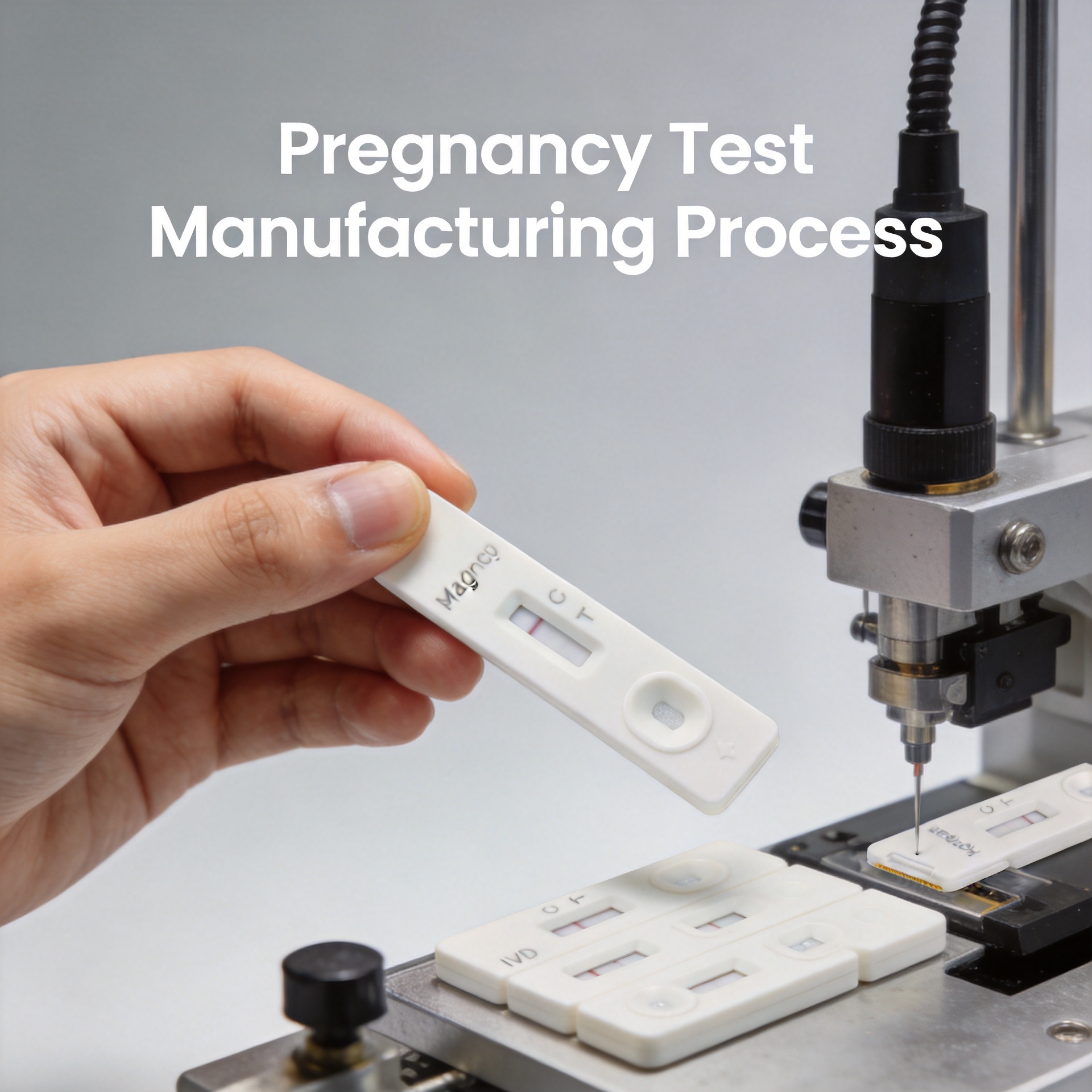
- Line Printing: Capture antibodies and control line antibodies are deposited onto the nitrocellulose membrane using precision dispensing equipment. Line position, width, and protein concentration are all controlled parameters. Even minor variation can affect the visual clarity of a result or the intensity of the control line signal.
- Strip Assembly: The four material components are laminated onto the backing card in precise overlapping zones to ensure uninterrupted capillary flow from sample pad through to absorbent pad.
- Cutting and Housing: The assembled laminate is cut to individual strip widths and placed into plastic cassette housings or foil-sealed pouches, depending on the product format.
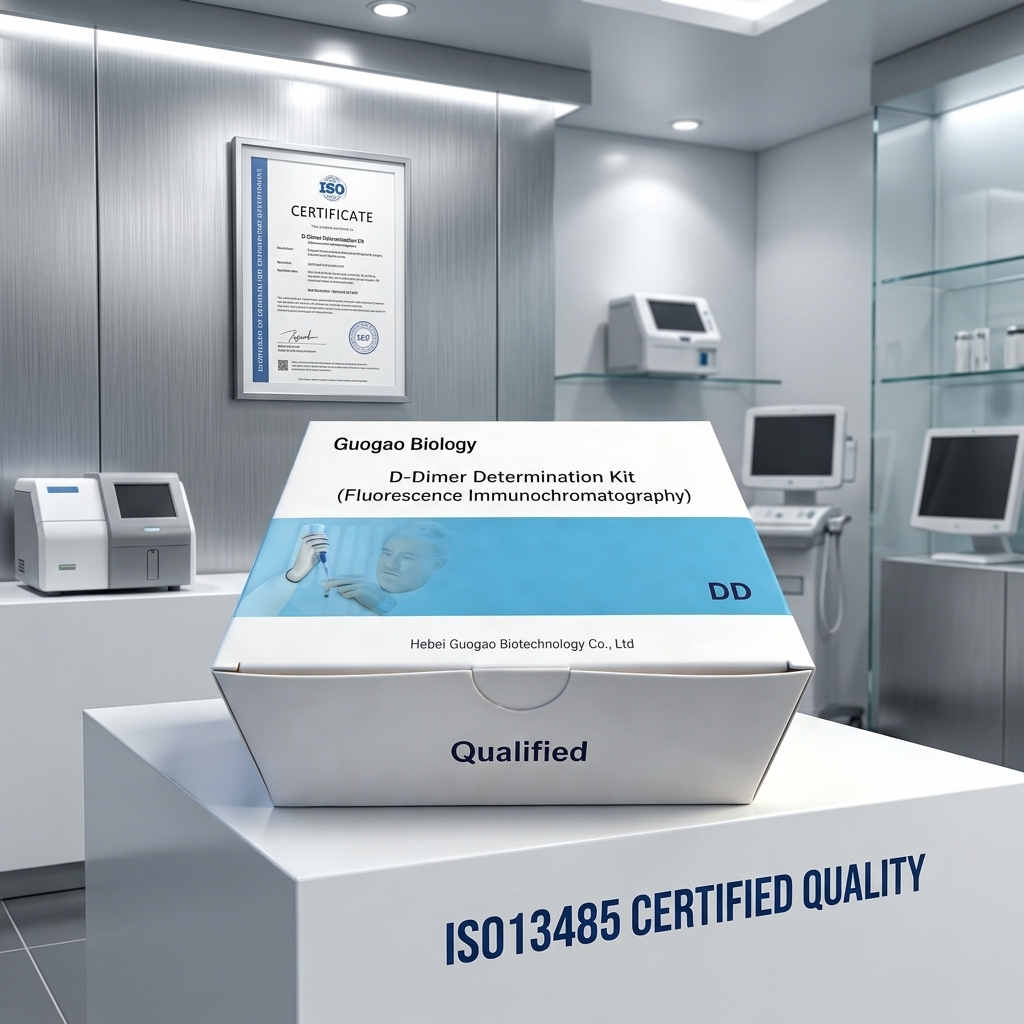
- Final QC and Lot Release: Finished product from each manufactured lot is tested against a defined quality control panel, a set of standardized positive and negative samples, to verify sensitivity, specificity, and control line response before lot release.

Quality Control Throughout the Production Process
Quality control in rapid test kit manufacturing is most effective when integrated at multiple stages, not just at lot release. A QC panel applied at the conjugate preparation stage, at line printing, and at final assembly provides actionable information about where performance deviations originate. This makes corrective action more targeted and less disruptive to production continuity.
For procurement teams evaluating suppliers, batch consistency data is a more informative reference than performance results from a single sample lot. Experienced distributors and importers routinely request multi-lot performance data, covering sensitivity, specificity, and control line intensity, as part of supplier qualification. Batch-to-batch variation in conjugate release and line printing is one of the more common sources of field complaints about rapid test kit performance.
Storage and shipping conditions introduce an additional quality variable that is sometimes overlooked at the sourcing stage. Stability studies replicating the temperature and humidity conditions of the intended distribution route, particularly for markets in Sub-Saharan Africa, South and Southeast Asia, or Latin America, provide a more realistic picture of product shelf life than standard label claims based on controlled storage alone.
Evaluating Supplier Capability From a Materials and Process Perspective
When sourcing a rapid test kit for international distribution, the manufacturing details outlined above translate into a practical set of questions for supplier evaluation. Suppliers who can describe their membrane material selection criteria, explain their conjugation process parameters, and provide documented multi-stage QC records demonstrate process maturity that supports long-term supply reliability. Those whose quality documentation consists primarily of final product certificates, without explaining how production consistency is maintained, represent a higher risk profile in batch-sensitive procurement contexts.
The same manufacturing knowledge helps set realistic expectations around product customization. OEM or private-label rapid test kit arrangements that require reagent reformulation for new analytes involve longer development cycles than adaptations of existing validated platforms. Clarifying this at the outset of commercial negotiations helps avoid timeline misalignment later in the project.
At JIUHEKIT, we work with IVD manufacturers who maintain structured quality control protocols across their production processes. If you are evaluating rapid test kit sourcing options for your region, we are available to provide technical product information and support your supplier assessment process. Contact us visit our website at www.jiuhekit.com.